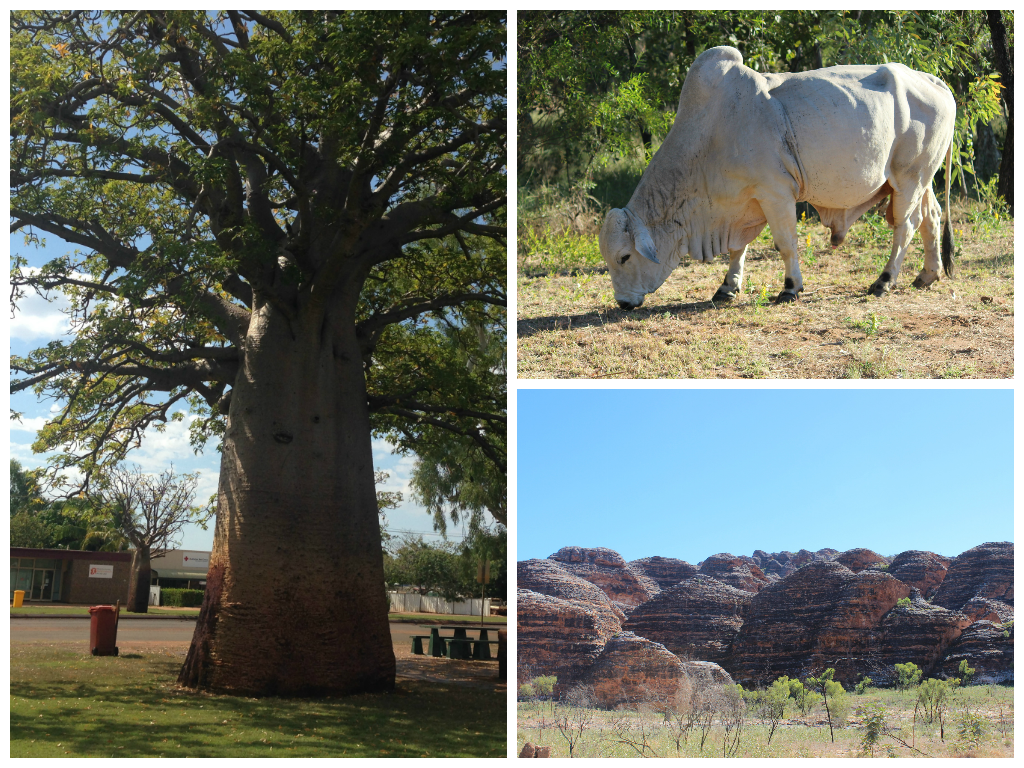
A vast land virtually untouched and unchanged by man, is the Kimberley region of the extreme north of Western Australia. It is described as being one of the world’s last great wilderness areas and is arguably one of the top holiday regions in Australia.
The Kimberley region stretches from Broome in the west, to Kununurra in the east, and covers 421,000 square kilometres in area. This magnificent part of Australia has the most diverse unique wildlife, mysterious cave systems, spectacular waterfalls, mangrove fringed estuaries and rugged red ranges decorated with sacred Aboriginal rock art.
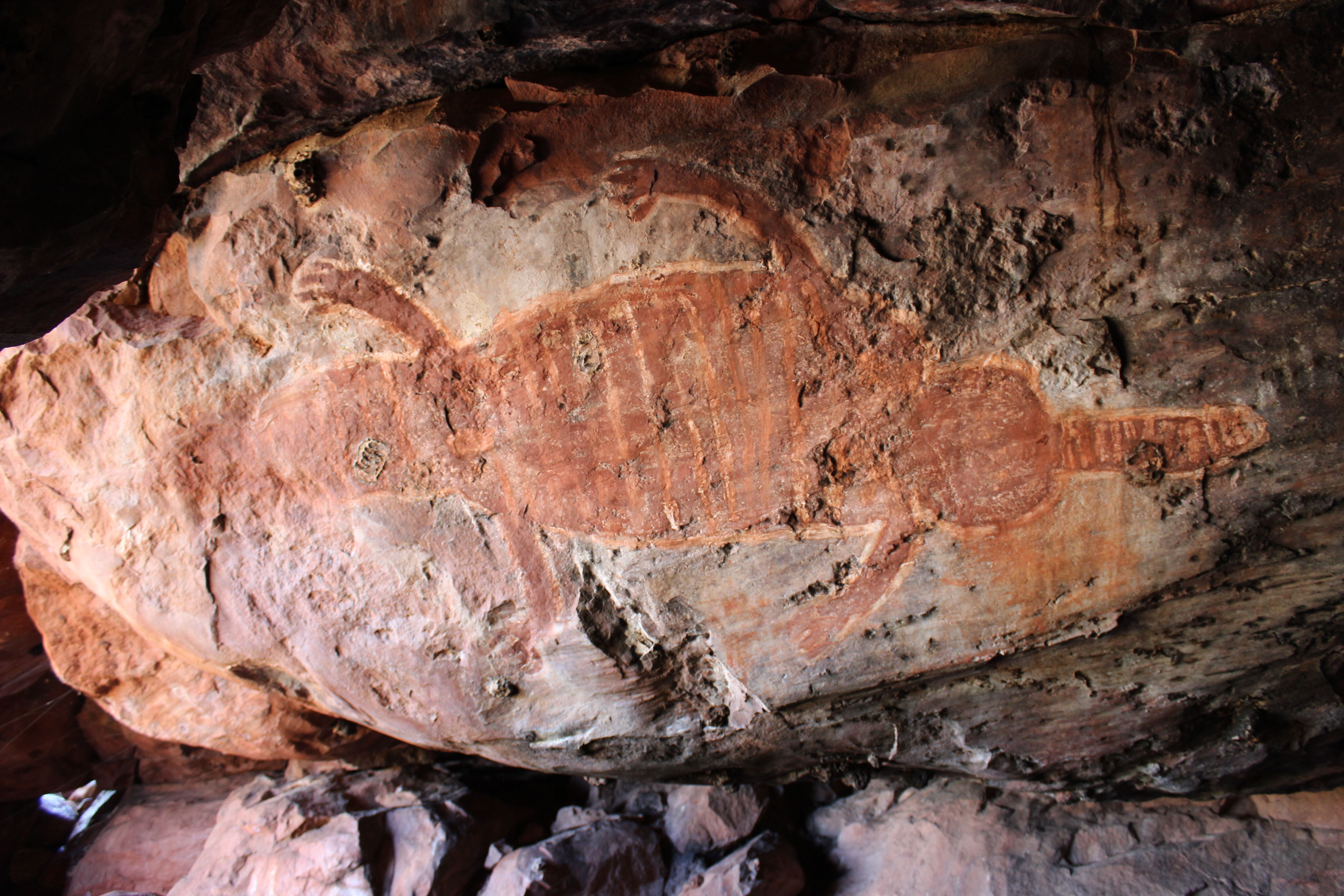
Aboriginal Rock Art
There are a couple of ways that you can explore the numerous natural attractions of the Kimberley. You can cross the sealed road over the Fitzroy Crossing, get off-road on a 4-wheel drive adventure, or take one of the 4-wheel drive bus tours, by taking the scenic Gibb River Road. Either route has numerous parks, reserves and natural wonders that are a feast for the eyes.
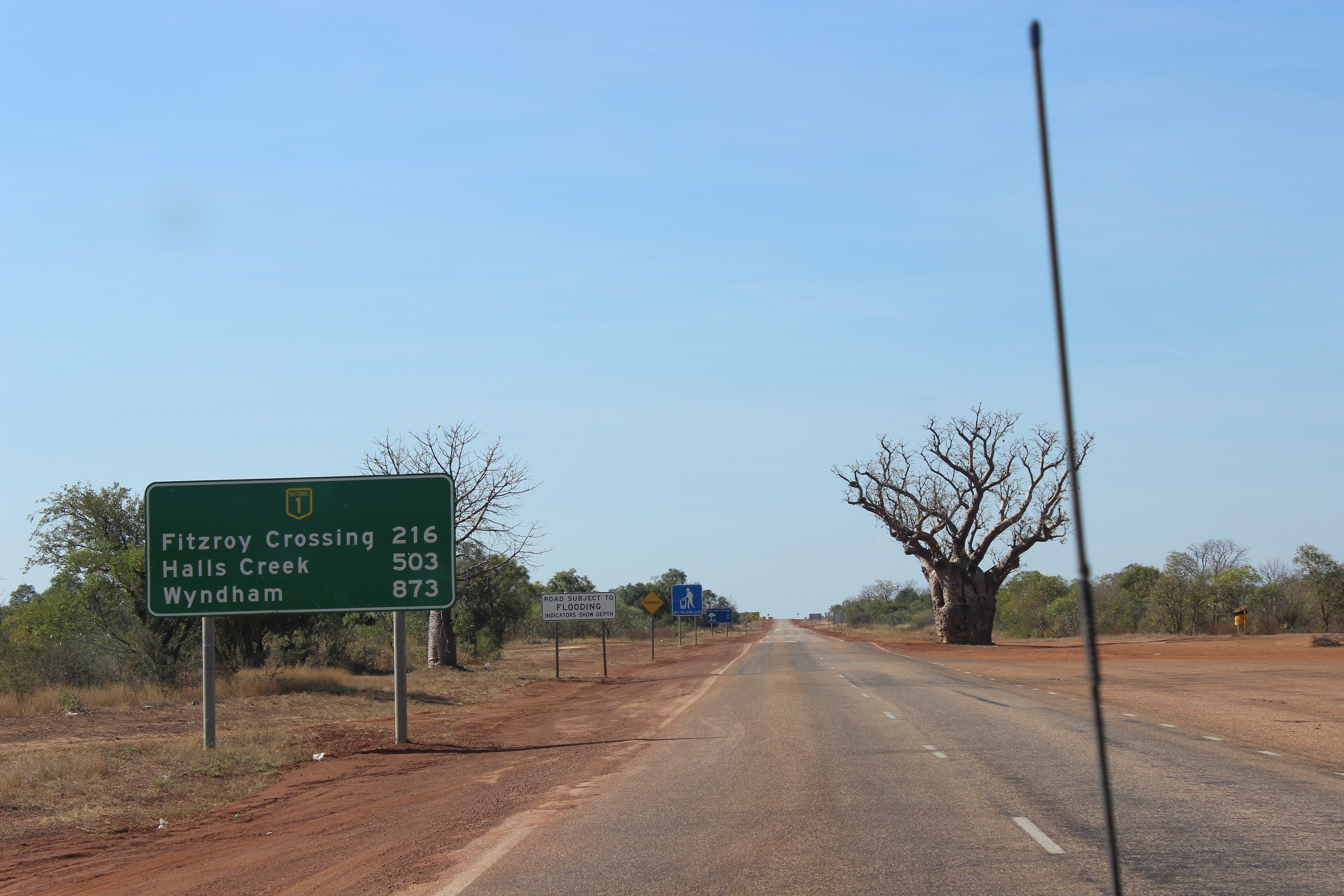
Start of the Fitzroy Crossing
Because we were towing a caravan (not equipped for river crossings or rough corrugated roads), we took the route across the Fitzroy Crossing. Our travel itinerary was as follows:
We travelled 220 kilometres north-east of Broome to the first settled town in the Kimberley, Derby. Situated on King Sound it boasts the highest tidal variation in Australia that can reach up to 11 metres. You can see these high and low tides from the U-shaped Derby Wharf, and throw a line or a crab pot in whilst you are there.
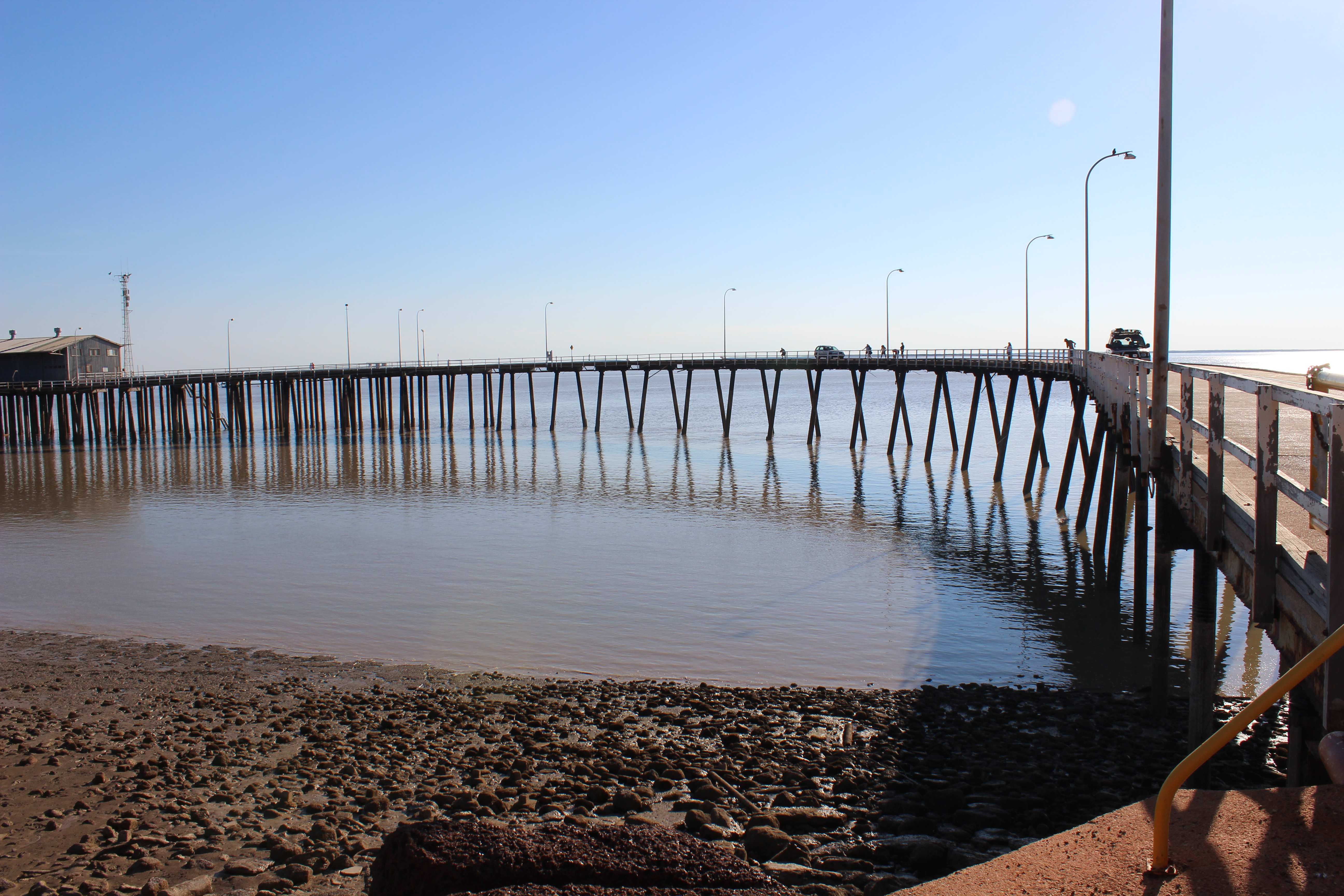
Derby Jetty
Other points of interest are the Old Derby Gaol, the Boab Prison Tree, Myall’s bore and cattle trough, Wharfinger House Museum, the Woolshed and Mowanjum Art and Cultural Centre. The most popular experience however is a scenic flight, fishing trip or sea safari to the Buccaneer Archipelago, made up of a thousand rugged islands, secluded beaches and the famous Horizontal Waterfalls.
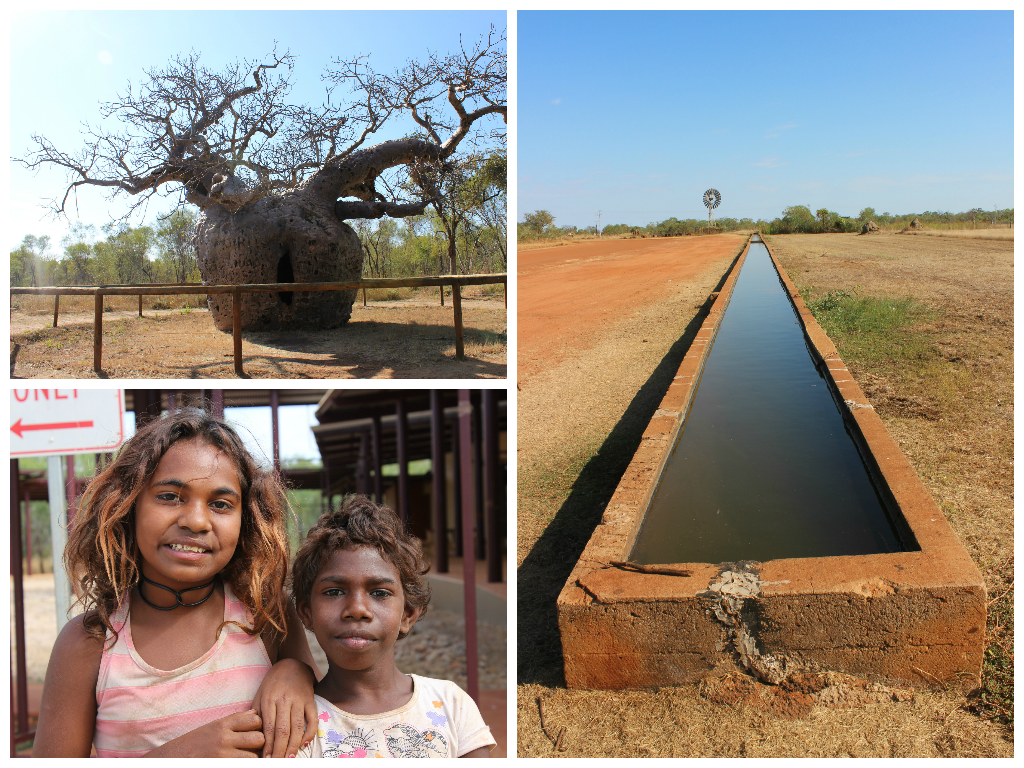
Sights around Derby
Driving 259 kilometres eastwards through savannah land, mostly dried up creek and river crossings with hundreds of Boab trees, is the town of Fitzroy Crossing. It is set on the banks of the mighty Fitzroy River and is a great base to explore Tunnel Creek, Windjana Gorge and nearby Geikie Gorge. There is also a spectacular network of caves, 90 kilometres east of Fitzroy Crossing, called Mimbi Caves.

Fitzroy River
We spent a leisurely morning on a boat cruise on the Fitzroy River meandering through the 30 metre deep carved gorge through the limestone junction of the Oscar and Geikie Ranges. Geikie Gorge is the habitat of many freshwater crocodiles, the rare Leichhardt’s Sawfish and Coach Whip Stingray. A stunning place to really appreciate the beauty of the Kimberley.

Geikie Gorge
Three hours drive from Fitzroy Crossing is the gold rush town of Halls Creek that has an interesting history. More than 15,000 people were drawn to the old Halls Creek to try their luck at gold prospecting but after three months the gold petered out. Halls Creek then became a trading centre for cattle stations, Aboriginal communities and miners.
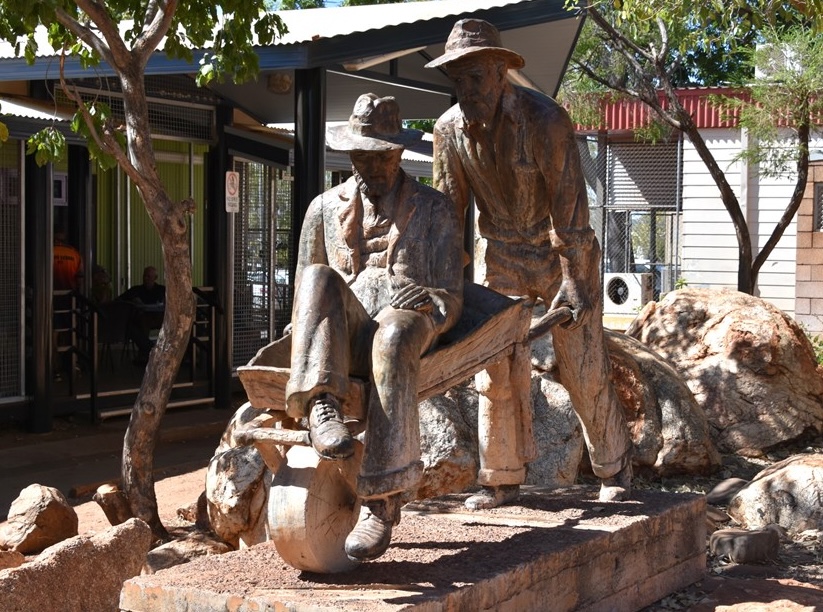
Whilst here you can view the China Wall, a sub-vertical quartz rock protruding 6 metres off the ground, walk the self-guided trail of Halls Creek town walk, visit the Aboriginal Yarliyil Art Centre or drive out to Wolfe Creek Crater, the second largest meteorite crater in the world.
A further 108 kilometres is the turn off to the Purnululu National Park and the wondrous Bungle Bungles. We stayed a couple of nights at the Bungle Bungles Caravan Park on the shores of Spring Creek so that we could leave our caravan and travel the 53 kilometres over very rough roads into the Bungle Bungles. We were not disappointed.
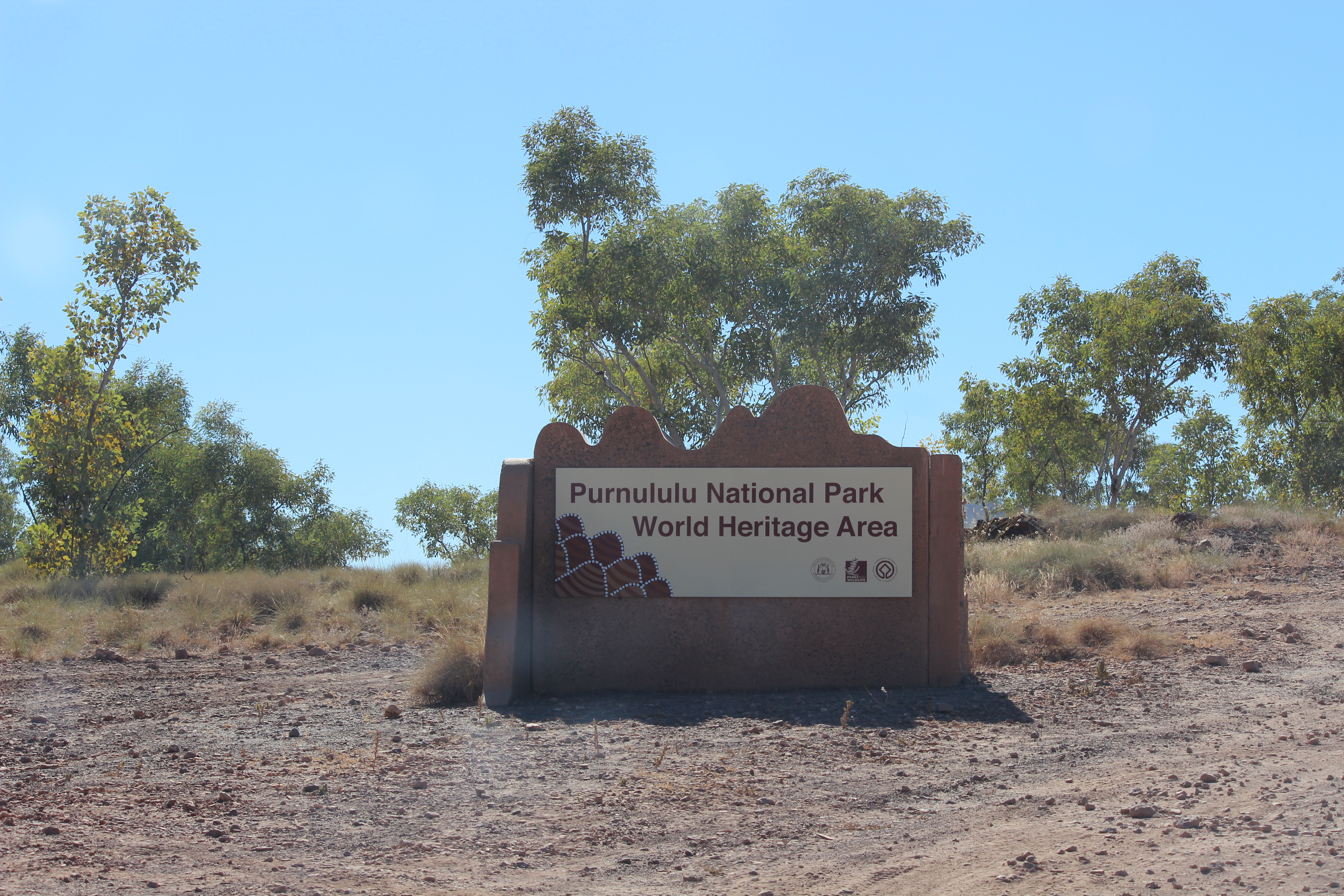
Purnululu National Park
Unrivalled in their scale, grandeur and diversity of form anywhere in the world, are the Bungle Bungle Range’s extraordinary array of banded sandstone domes. Covering a whopping 45,000 hectares of the park, these dramatically sculptured natural formations are sometimes likened to black and orange striped ‘beehives’.
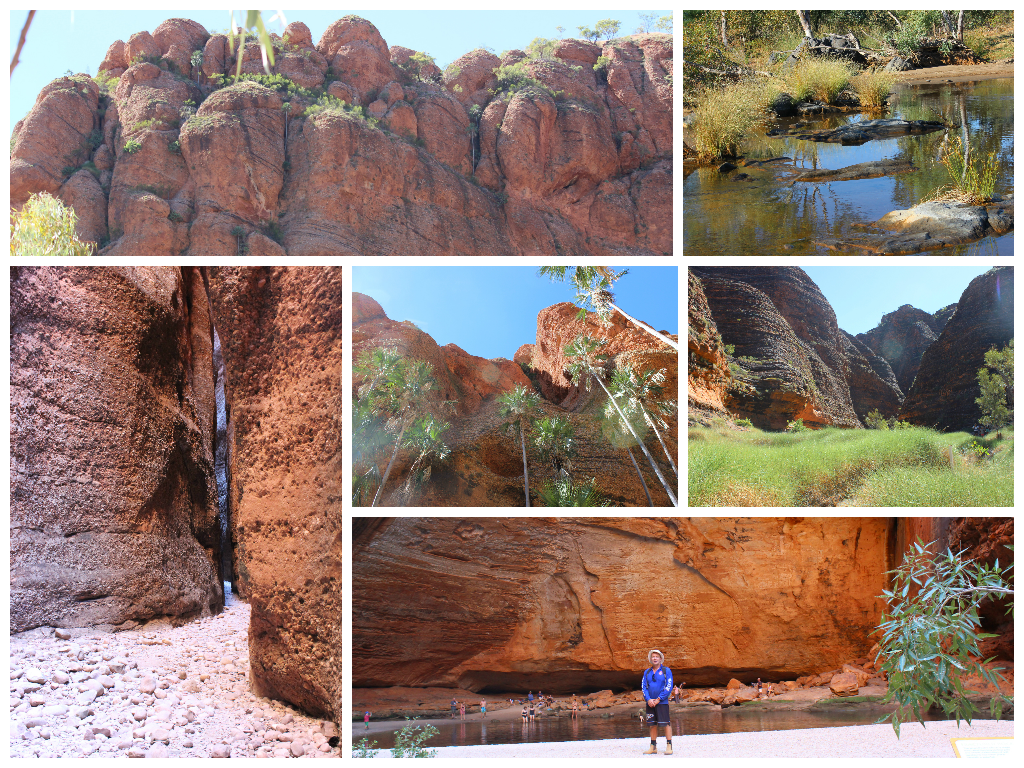
Bungle Bungles
Walking tracks are the best way to explore the features of the Bungle Bungles. There are several trails available from easy one kilometre loops walks to more challenging two to seven day hikes.

Cathedral Gorge, Bungle Bungles
Our journey across the Fitzroy Crossing came to an end at the town of five rivers – Wyndham. After a very picturesque and scenic two hour drive through vast cattle stations and mountain ranges including the O’Donnell, Carr Boyd and Cockburn Ranges. The Gibb River Road joins the Northern Highway 48 kilometres short of the township, the alternate route across the East Kimberley and whose discovery will be for another day.
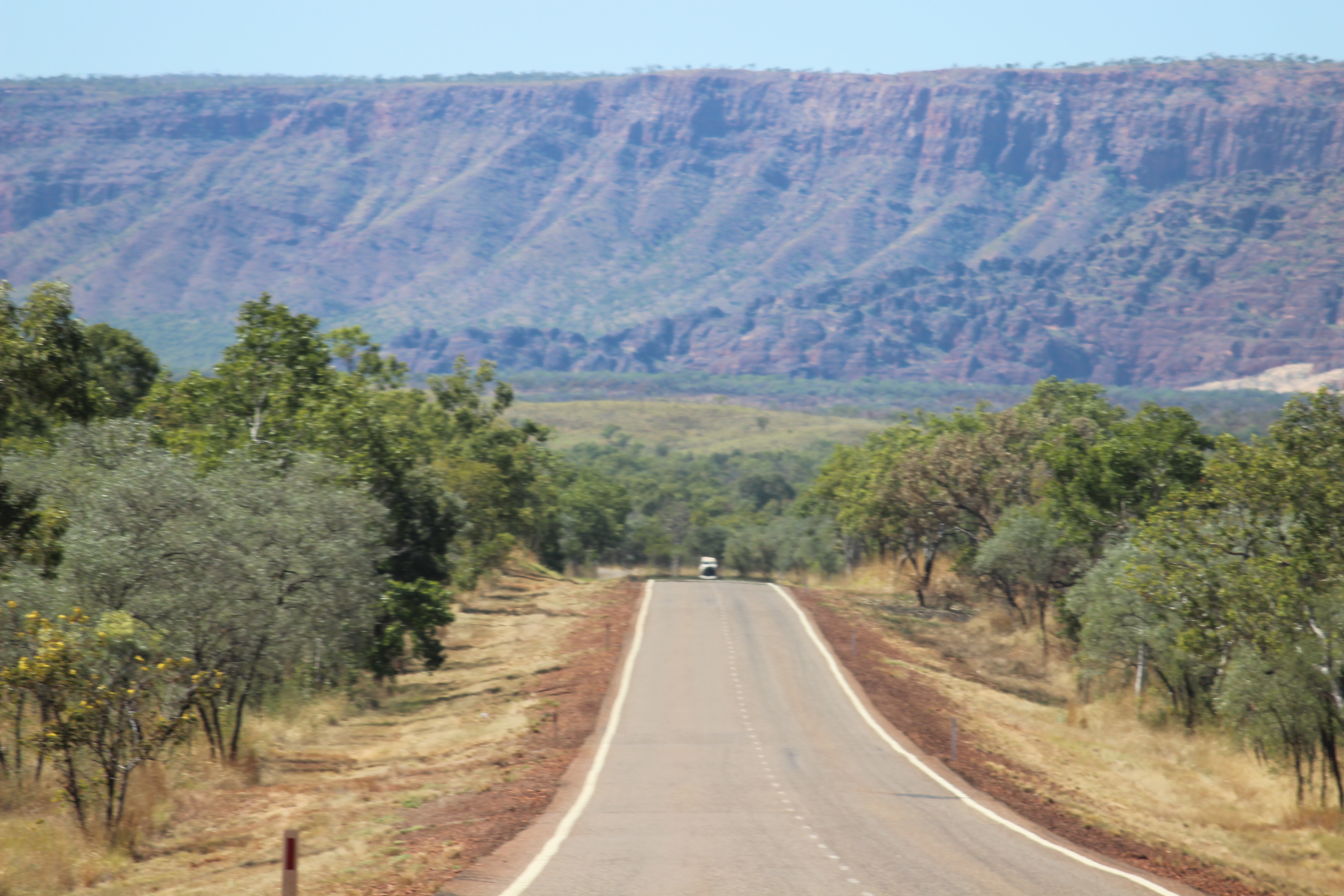
Driving into the East Kimberley
The raw beauty of the Kimberley truly astounded me. At every hill rise, and at the turn of every bend, there was an astonishing vista of mountain ranges, that changed colour throughout the day. This spectacular countryside was truly mesmerizing and a wondrous wilderness.

Comments are closed.





bmpermie
July 22, 2014Great pics as always. Such a beautiful part of the world. Enjoy
Kathy
July 23, 2014Yes the Kimberley region was sensational. I hope to return one day to drive the Gibb River Road.
Johanna
July 23, 2014It is such an amazing part of Australia and although it’s so big what amazed me when we visited was the diversity amongst the enormity. Who would have thought you’d find such incredible gorges and tropical scenes in an outback region. So glad you had a great trip across, and hope you get to do The Gibb River road one day too – I didn’t realise that you couldn’t take caravans across – note to self for future (thank you!).
Kathy
July 23, 2014Jo, words cannot fully describe how magnificent the Kimberley was. We have travelled all over Australia now (apart from the very far north of Queensland), and I have not seen beauty like it!
Pinky Poinker
July 23, 2014You certainly captured the raw beauty with your pics Kathy. I’ve always wanted to see the Bungle Bungles. Sounds amazing. You should be getting paid by Tourism Australia for this blog!
kathymarris
July 23, 2014Ha ha, I wish! I don’t even think my photos have done the Kimberley justice. It was so amazing!
Red Hunt (@redhunttravel)
July 24, 2014Great photos and quite the travel experience. Australia continues to taunt me as the one place I’ve never been, but has always been on my travel list. I love boabs too, saw many of the baobob trees in Madagascar years ago, such interesting trees!
Kathy
July 24, 2014You would be astounded as to the versatility and beauty that Australia has to offer. I hope you get to visit one day. Thank you for dropping by my blog.
Susan Lattwein
July 29, 2014Love your choice of photos Kathy, and such different sizes of things, trees, cattle troughs, rock formations, even bulls! The Kimberley is on my list now. :)
Kathy
July 30, 2014It should be on everyone’s bucket list Susan. It simply took my breath away!